Filters
Question type

Study Flashcards

The age of an ancient tree trunk is estimated using radiocarbon dating.If the trunk has a C-14 decay rate that is 34% of what it is in living plants,how old is the trunk? The half-life of C-14 is 5730 years.


A) 2.92 × 10⁴ years
B) 1.94 × 10⁴ years
C) 8.92 × 10³ years
D) 5.31 × 10³ years
E) 1.74 × 10² years

F) C) and E)
G) A) and E)

Correct Answer

verifed

verified

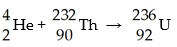
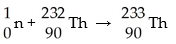
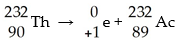
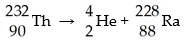
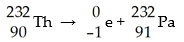
Write the nuclear equation for the alpha decay of Write the nuclear equation for the alpha decay of  Th. A)    B)    C)    D)    E)   Th.


A) Write the nuclear equation for the alpha decay of  Th. A)    B)    C)    D)    E)
B) Write the nuclear equation for the alpha decay of  Th. A)    B)    C)    D)    E)
C) Write the nuclear equation for the alpha decay of  Th. A)    B)    C)    D)    E)
D) Write the nuclear equation for the alpha decay of  Th. A)    B)    C)    D)    E)
E) Write the nuclear equation for the alpha decay of  Th. A)    B)    C)    D)    E)

F) A) and B)
G) A) and C)

Correct Answer

verifed

verified

Determine the identity of the daughter nuclide from the positron emission of Determine the identity of the daughter nuclide from the positron emission of  F. A)   Na B)   F C)   N D)   O E)   NeF.


A) Determine the identity of the daughter nuclide from the positron emission of  F. A)   Na B)   F C)   N D)   O E)   NeNa
B) Determine the identity of the daughter nuclide from the positron emission of  F. A)   Na B)   F C)   N D)   O E)   NeF
C) Determine the identity of the daughter nuclide from the positron emission of  F. A)   Na B)   F C)   N D)   O E)   NeN
D) Determine the identity of the daughter nuclide from the positron emission of  F. A)   Na B)   F C)   N D)   O E)   NeO
E) Determine the identity of the daughter nuclide from the positron emission of  F. A)   Na B)   F C)   N D)   O E)   NeNe

F) C) and E)
G) A) and B)

Correct Answer

verifed

verified

Why is an alpha emitter much more harmful if ingested?

Correct Answer

verifed

verified

Alpha emitters have the highes...

View Answer

Determine the identity of the daughter nuclide from the beta decay of Determine the identity of the daughter nuclide from the beta decay of  Sr. A)   Sr B)   Y C)   Y D)   Kr E)   SeSr.


A) Determine the identity of the daughter nuclide from the beta decay of  Sr. A)   Sr B)   Y C)   Y D)   Kr E)   SeSr
B) Determine the identity of the daughter nuclide from the beta decay of  Sr. A)   Sr B)   Y C)   Y D)   Kr E)   SeY
C) Determine the identity of the daughter nuclide from the beta decay of  Sr. A)   Sr B)   Y C)   Y D)   Kr E)   SeY
D) Determine the identity of the daughter nuclide from the beta decay of  Sr. A)   Sr B)   Y C)   Y D)   Kr E)   SeKr
E) Determine the identity of the daughter nuclide from the beta decay of  Sr. A)   Sr B)   Y C)   Y D)   Kr E)   SeSe

F) B) and C)
G) B) and E)

Correct Answer

verifed

verified

Nuclides above the valley of stability can become more stable through which of the following processes?


A) beta emission
B) positron emission
C) alpha emission
D) electron capture
E) neutron bombardment

F) A) and E)
G) None of the above

Correct Answer

verifed

verified

Identify the following diagnostic procedure that gives the lowest dose of radiation.


A) dental X-ray - panoramic
B) upper gastrointestinal tract X-ray
C) chest X-ray
D) mammogram
E) X-ray after barium enema

F) A) and B)
G) A) and D)

Correct Answer

verifed

verified

Describe what changes occur during beta decay.


A) The mass number and atomic number decrease.
B) The mass number and atomic number increase.
C) The mass number is unchanged and the atomic number decreases.
D) The mass number is unchanged and the atomic number increases.
E) The mass number and atomic number do not change.

F) A) and C)
G) B) and E)

Correct Answer

verifed

verified

Identify the missing particle in the following nuclear equation: Identify the missing particle in the following nuclear equation:   Pb → E + ? A)   Bi B)   Tl C)   Pb D)   Pb E)   TlPb →Identify the missing particle in the following nuclear equation:   Pb → E + ? A)   Bi B)   Tl C)   Pb D)   Pb E)   TlE + ?


A) Identify the missing particle in the following nuclear equation:   Pb → E + ? A)   Bi B)   Tl C)   Pb D)   Pb E)   TlBi
B) Identify the missing particle in the following nuclear equation:   Pb → E + ? A)   Bi B)   Tl C)   Pb D)   Pb E)   TlTl
C) Identify the missing particle in the following nuclear equation:   Pb → E + ? A)   Bi B)   Tl C)   Pb D)   Pb E)   TlPb
D) Identify the missing particle in the following nuclear equation:   Pb → E + ? A)   Bi B)   Tl C)   Pb D)   Pb E)   TlPb
E) Identify the missing particle in the following nuclear equation:   Pb → E + ? A)   Bi B)   Tl C)   Pb D)   Pb E)   TlTl

F) B) and D)
G) A) and C)

Correct Answer

verifed

verified

Identify the missing particle in the following nuclear equation: Identify the missing particle in the following nuclear equation:   U → Sr + ? +2 N + 4 Γ A)   Te B)    Xe C)    Xe D)   Te E)   SrU →Identify the missing particle in the following nuclear equation:   U → Sr + ? +2 N + 4 Γ A)   Te B)    Xe C)    Xe D)   Te E)   SrSr + ? +2Identify the missing particle in the following nuclear equation:   U → Sr + ? +2 N + 4 Γ A)   Te B)    Xe C)    Xe D)   Te E)   SrN + 4Identify the missing particle in the following nuclear equation:   U → Sr + ? +2 N + 4 Γ A)   Te B)    Xe C)    Xe D)   Te E)   SrΓ


A) Identify the missing particle in the following nuclear equation:   U → Sr + ? +2 N + 4 Γ A)   Te B)    Xe C)    Xe D)   Te E)   SrTe
B) Identify the missing particle in the following nuclear equation:   U → Sr + ? +2 N + 4 Γ A)   Te B)    Xe C)    Xe D)   Te E)   Sr Xe
C) Identify the missing particle in the following nuclear equation:   U → Sr + ? +2 N + 4 Γ A)   Te B)    Xe C)    Xe D)   Te E)   Sr Xe
D) Identify the missing particle in the following nuclear equation:   U → Sr + ? +2 N + 4 Γ A)   Te B)    Xe C)    Xe D)   Te E)   SrTe
E) Identify the missing particle in the following nuclear equation:   U → Sr + ? +2 N + 4 Γ A)   Te B)    Xe C)    Xe D)   Te E)   SrSr

F) D) and E)
G) A) and D)

Correct Answer

verifed

verified

Fluorine-18 undergoes positron emission with a half-life of 1.10 × 10² minutes.If a patient is given a 248 mg dose for a PET scan,how long will it take for the amount of fluorine-18 to drop to 83 mg? (Assume that none of the fluorine is excreted from the body. )


A) 99 minutes
B) 1.74 × 10² minutes
C) 1.32 × 10² minutes
D) 3.00 × 10² minutes
E) 2.11 × 10² minutes

F) A) and E)
G) None of the above

Correct Answer

verifed

verified

Match the following. -neutron


A) Match the following. -neutron A)   γ B)   p C)   n D)   e E)   He F)   e γ
B) Match the following. -neutron A)   γ B)   p C)   n D)   e E)   He F)   e p
C) Match the following. -neutron A)   γ B)   p C)   n D)   e E)   He F)   e n
D) Match the following. -neutron A)   γ B)   p C)   n D)   e E)   He F)   e e
E) Match the following. -neutron A)   γ B)   p C)   n D)   e E)   He F)   e He
F) Match the following. -neutron A)   γ B)   p C)   n D)   e E)   He F)   e e

G) A) and B)
H) A) and C)

Correct Answer

verifed

verified

Determine the identity of the daughter nuclide from the positron emission of Determine the identity of the daughter nuclide from the positron emission of  Ge. A)   Ga B)   As C)   Zn D)   As E)   GaGe.


A) Determine the identity of the daughter nuclide from the positron emission of  Ge. A)   Ga B)   As C)   Zn D)   As E)   GaGa
B) Determine the identity of the daughter nuclide from the positron emission of  Ge. A)   Ga B)   As C)   Zn D)   As E)   GaAs
C) Determine the identity of the daughter nuclide from the positron emission of  Ge. A)   Ga B)   As C)   Zn D)   As E)   GaZn
D) Determine the identity of the daughter nuclide from the positron emission of  Ge. A)   Ga B)   As C)   Zn D)   As E)   GaAs
E) Determine the identity of the daughter nuclide from the positron emission of  Ge. A)   Ga B)   As C)   Zn D)   As E)   GaGa

F) A) and E)
G) B) and E)

Correct Answer

verifed

verified

Determine the identity of the daughter nuclide from the alpha decay of Determine the identity of the daughter nuclide from the alpha decay of  Po. A)   Rn B)   Pb C)   Ra D)   Hg E)   AtPo.


A) Determine the identity of the daughter nuclide from the alpha decay of  Po. A)   Rn B)   Pb C)   Ra D)   Hg E)   AtRn
B) Determine the identity of the daughter nuclide from the alpha decay of  Po. A)   Rn B)   Pb C)   Ra D)   Hg E)   AtPb
C) Determine the identity of the daughter nuclide from the alpha decay of  Po. A)   Rn B)   Pb C)   Ra D)   Hg E)   AtRa
D) Determine the identity of the daughter nuclide from the alpha decay of  Po. A)   Rn B)   Pb C)   Ra D)   Hg E)   AtHg
E) Determine the identity of the daughter nuclide from the alpha decay of  Po. A)   Rn B)   Pb C)   Ra D)   Hg E)   AtAt

F) B) and D)
G) A) and E)

Correct Answer

verifed

verified

Determine the identity of the daughter nuclide from the beta decay of Determine the identity of the daughter nuclide from the beta decay of  Pb. A)   Pt B)   Tl C)   Hg D)   Bi E)   PbPb.


A) Determine the identity of the daughter nuclide from the beta decay of  Pb. A)   Pt B)   Tl C)   Hg D)   Bi E)   PbPt
B) Determine the identity of the daughter nuclide from the beta decay of  Pb. A)   Pt B)   Tl C)   Hg D)   Bi E)   PbTl
C) Determine the identity of the daughter nuclide from the beta decay of  Pb. A)   Pt B)   Tl C)   Hg D)   Bi E)   PbHg
D) Determine the identity of the daughter nuclide from the beta decay of  Pb. A)   Pt B)   Tl C)   Hg D)   Bi E)   PbBi
E) Determine the identity of the daughter nuclide from the beta decay of  Pb. A)   Pt B)   Tl C)   Hg D)   Bi E)   PbPb

F) C) and E)
G) B) and D)

Correct Answer

verifed

verified

The nuclide As-76 has a half-life of 26.0 hours.If a sample of As-76 weighs 344 g,what mass of As-76 remains after 538 minutes?


A) 67.8 g
B) 271 g
C) 144 g
D) 437 g
E) 251 g

F) All of the above
G) C) and D)

Correct Answer

verifed

verified

Explain how radiation increases cancer risk.

Correct Answer

verifed

verified

Radiation increases cancer risk because ...

View Answer

Identify the symptom that is not from radiation exposure.


A) increased white cell count
B) increased cancer risk
C) death
D) genetic effects
E) weaker immune systems

F) A) and D)
G) A) and B)

Correct Answer

verifed

verified

Potassium-40 decays to argon-40 with a half-life of 1.27 × 10⁹ yr.The age of a mineral sample that has a mass ratio of 40Ar to 40K of 3.60 is ________ yr.


A) 3.53 × 10⁸
B) 3.11 × 10⁸
C) 4.49 × 10⁸
D) 1.94 × 10⁹
E) 2.80 × 10⁹

F) None of the above
G) B) and D)

Correct Answer

verifed

verified

In addition to a beta particle,what is the other product of beta decay of In addition to a beta particle,what is the other product of beta  decay of  Pb? A)   Hg B)   Tl C)   Bi D)   PoPb?


A) In addition to a beta particle,what is the other product of beta  decay of  Pb? A)   Hg B)   Tl C)   Bi D)   PoHg
B) In addition to a beta particle,what is the other product of beta  decay of  Pb? A)   Hg B)   Tl C)   Bi D)   PoTl
C) In addition to a beta particle,what is the other product of beta  decay of  Pb? A)   Hg B)   Tl C)   Bi D)   PoBi
D) In addition to a beta particle,what is the other product of beta  decay of  Pb? A)   Hg B)   Tl C)   Bi D)   PoPo

E) C) and D)
F) A) and B)

Correct Answer

verifed

verified

Showing 21 - 40 of 105

Related Exams

Show Answer