A) I
B) II
C) III
D) IV
E) V
G) A) and C)
Correct Answer

verified
Correct Answer
verified
Correct Answer
verified
Correct Answer
verified
A) I
B) II
C) III
D) IV
E) V
G) B) and D)
Correct Answer
verified
Correct Answer
verified
Correct Answer
verified
Correct Answer
verified
Correct Answer
verified
Correct Answer
verified
Correct Answer
verified
Correct Answer
verified
A) I
B) II
C) III
D) IV
E) V
G) A) and D)
Correct Answer
verified
Correct Answer
verified
A) 1-phenylethanol + manganese dioxide + heat
B) 1-phenylethanol + sodium dichromate + acid + heat
C) tert-butylbenzene + sodium dichromate + acid + heat
D) ethylbenzene + sodium dichromate + acid + heat
E) phenylmethanol + manganese dioxide + heat
G) All of the above
Correct Answer
verified
Correct Answer
verified
Correct Answer
verified
Correct Answer
verified
Correct Answer
verified
Correct Answer
verified
A) tribromobenzene
B) m,m-dibromobromobenzene
C) 3,5-dibromobromobenzene
D) 1,3,5-tribromobenzene
E) m,m,m-tribromobenzene
G) B) and C)
Correct Answer
verified
Correct Answer
verified
A) 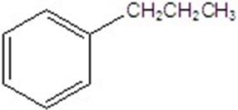
B) 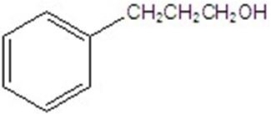
C) 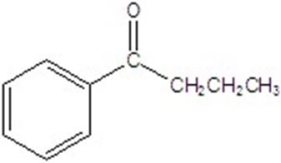
D) 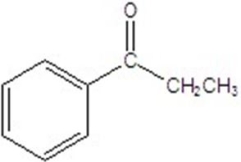
E) 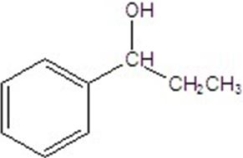
G) All of the above
Correct Answer
verified
Correct Answer
verified
A) 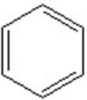
B) 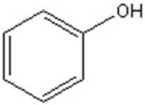
C) 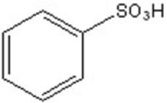
D) 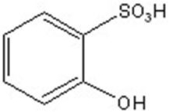
E) 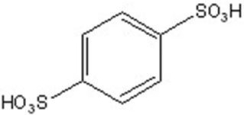
G) None of the above
Correct Answer
verified
Correct Answer
verified
Correct Answer
verified
Cycloheptatriene is a weaker acid than c...View Answer
Correct Answer
verified
View Answer
A) a deactivator and a m-director
B) a deactivator and an o,p-director
C) an activator and a m-director
D) an activator and an o,p-director
E) none of the above
G) C) and E)
Correct Answer
verified
Correct Answer
verified
A) It protonates the benzene ring in the first step.
B) It protonates the -OH group of the nitric acid.
C) It protonates the nitrogen atom of the nitric acid.
D) It deprotonates the -OH group of the nitric acid.
E) none of the above
G) B) and E)
Correct Answer
verified
Correct Answer
verified
A) nitrate; Sn/HCl; NaNO2/HCl,0°C; brominate twice
B) nitrate; Sn/HCl; NaNO2/HCl,0°C; brominate twice; H3PO2
C) nitrate; Sn/HCl; NaNO2/HCl,0°C; H3PO2; brominate twice
D) nitrate; brominate; Sn/HCl; NaNO2/HCl,0°C; CuBr
E) brominate twice
G) C) and E)
Correct Answer
verified
Correct Answer
verified
A) I
B) II
C) III
D) IV
E) V
G) A) and B)
Correct Answer
verified
Correct Answer
verified
A) I
B) II
C) III
D) IV
E) V
G) B) and C)
Correct Answer
verified
Correct Answer
verified
A) It serves as a radical initiator to produce the chlorine radical needed to propagate the chain reaction.
B) It functions by destabilizing the carbocationic intermediate and thereby increases the rate of H+ loss.
C) It serves as a Lewis base catalyst by reacting with Cl2 to generate chloride ions.
D) It functions by destabilizing the benzene through formation of a π-complex.
E) It serves as a Lewis acid catalyst by reacting with the Cl2 and thereby activates it toward attack by benzene's π electrons.
G) C) and D)
Correct Answer
verified
Correct Answer
verified
Showing 61 - 80 of 168
Related Exams